Menopause changes the rules of metabolism- here's the evidence-based plan to reset your body for fat loss, energy, and performance.
You are not imagining it: in midlife, the old “eat the same, work out the same” formula often stops working because your hormones, muscle, brain, and sleep all shift, changing how your body uses and stores energy. Your body hasn't betrayed you, it just changed the rules (without sending you the memo)! The good news is that once you understand what is happening under the hood, you can follow a new, evidence-based game plan that fits this season of life-not your 30‑year‑old body.
When Effort Stops Working
Many high-achieving women notice that in their 40s and 50s, weight creeps up (especially around the middle) even though their habits have not changed much. Research shows women often gain about 5–7 pounds over the menopause transition, with a clear shift toward more belly fat, even when total weight change is small.
This is not a character flaw, a lack of willpower, or personal failing; it's a biological shift driven by hormones, aging muscle, brain chemistry, sleep, and stress. Once these levers are clear, it becomes possible to design a smarter plan instead of pushing harder on a plan that no longer fits.
What Changes In Midlife
As estrogen drops and progesterone fluctuates in perimenopause, your body moves from more of a “burn and use” mode to more of a “save and store” mode. Estrogen helps your cells respond to insulin, the hormone that moves sugar from your blood into your cells for energy.
With less estrogen, your cells may become more insulin resistant, which means the same foods can lead to more fat storage, especially around the belly. At the same time, normal aging causes slow loss of muscle, which lowers how many calories you burn at rest, even when the scale has not changed much.
Hormones And Your Metabolism
Declining estrogen changes where your body prefers to store fat- shifting fat from hips and thighs toward the abdomen, which is more “metabolically active” and linked to higher blood sugar and inflammation. Progesterone changes can also affect fluid balance, mood, and sleep, which indirectly change eating patterns and movement.
Hormones also talk to appetite and fullness signals in the brain, like leptin and ghrelin, which tell you when you are hungry or satisfied. When estrogen is lower and sleep is disrupted, these signals can get louder and less accurate, making cravings and “bottomless pit” hunger more common.
Metabolic “Efficiency” And Muscle
Think of your body like a hybrid car: over time it can get “too efficient” at saving fuel instead of burning it. With less estrogen and less muscle, your resting metabolic rate drops, so the same calorie intake that kept you stable at 38 may now be a slow surplus at 48.
If most of your exercise is cardio without enough strength work, you may actually lose more muscle while holding onto fat, even if the scale barely moves. On top of that, fatigue, joint pain, and stress can lower your “NEAT” (non‑exercise activity thermogenesis)-the small daily movements like pacing, fidgeting, and taking stairs- that quietly burn a lot of calories in your 30s.
Sleep, Stress, And Appetite
Hot flashes, night sweats, and early awakenings cut deep into sleep during perimenopause and menopause. Poor sleep makes your body more insulin resistant, raises cortisol (your main stress hormone), and boosts hunger hormones like ghrelin while lowering leptin, the one that signals fullness- all pushing you to store fat and crave quick, high-sugar foods.
This creates a vicious cycle: bad sleep spikes stress and hunger → more snacking and fat storage → worse sleep from blood sugar swings and extra weight → even more stress and cravings, all without changing your diet or routine.
High-pressure work, caregiving, and constant multitasking keep your stress system “on,” driving emotional eating and even higher cortisol. Over time, this loop can match the impact of what’s on your plate for weight gain.
Why Your Old Plan Fails
When you put all of this together, here is what often happens:
- Same calories + lower muscle + more insulin resistance = slow, steady fat gain.
- Same workouts (often cardio‑heavy, low protein) = more muscle loss and “skinny fat” body composition, even if weight is similar.
- More stress and worse sleep = more cravings, more nighttime snacking, and less daily movement without you even noticing.
So it feels like “diminishing returns.” You continue to work, but keep in mind that the rules of the game have changed without your consent. You are not broken; you're in a new chapter of your hero’s journey, and this chapter requires a smarter, midlife‑specific strategy.
Strategic Action Plan
Here is a focused plan that high-performing women can start now. Treat it like a training block for this new phase of life.
1. Get A Clear Baseline
- Track for 1–2 weeks: when and what you eat, sleep time and quality, movement, and how hungry or full you feel. Apps are great for tracking!
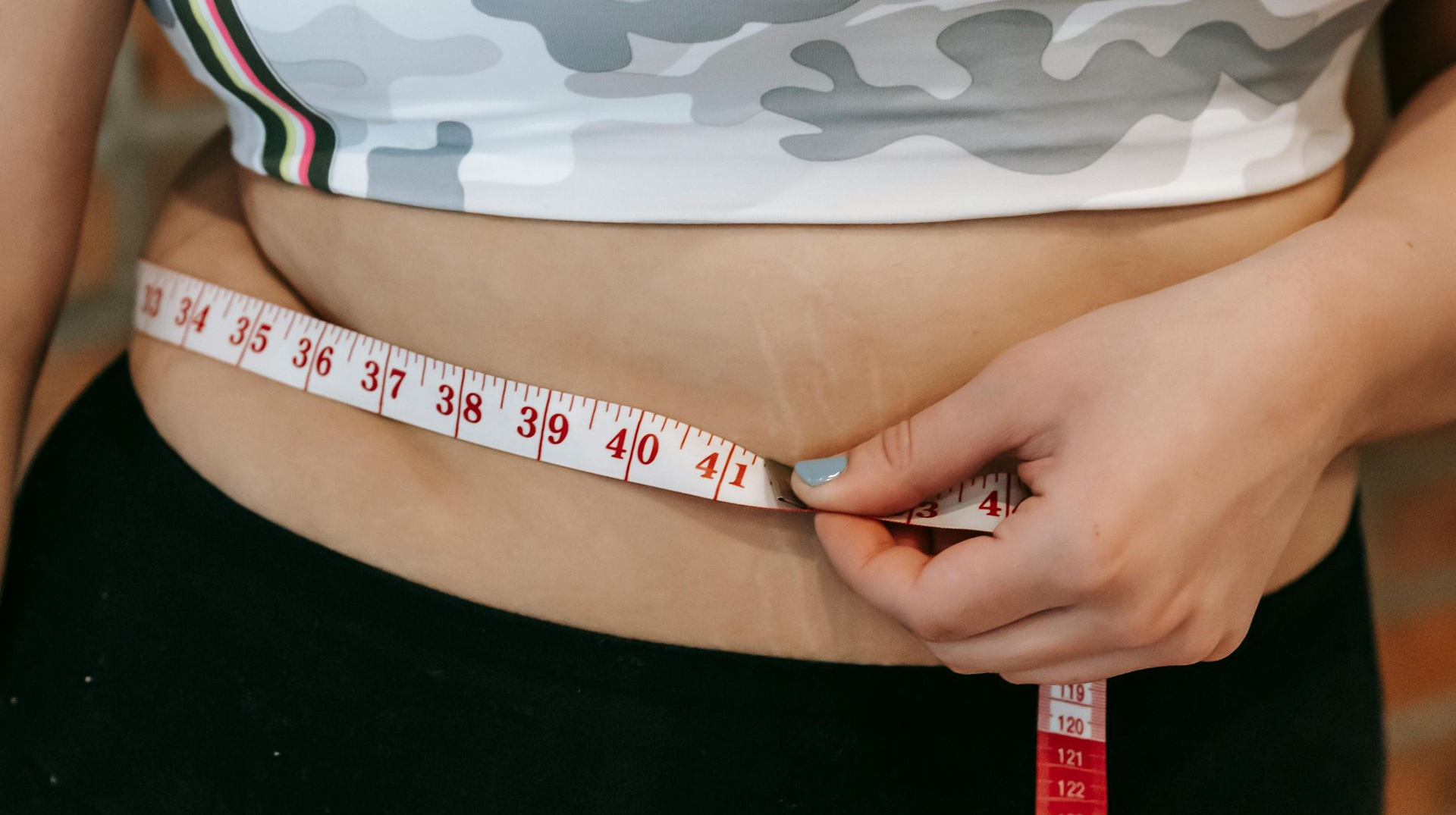
- Measure: waist circumference, how clothes fit, energy, focus, mood- not just the scale. How to measure your waist-to-hip ratio (WHR): Stand straight, exhale. Measure waist at narrowest point (above belly button); hips at widest (buttocks). Divide waist inches by hips (e.g., 32/40 = 0.80). Why? Belly fat signals heart/diabetes risk better than scale. Normal for women: under 0.85 = low risk; 0.85+ = moderate-high.
This gives you data so you can act like the CEO of your health, not guess.
2. Protect And Build Muscle
- Aim for about 25–30 grams of protein at each main meal (for many women, roughly 1.0–1.2 grams of protein per kilogram of body weight per day, if kidneys are healthy). Eat your protein meal within 1 hour of waking (or by 10am) to jumpstart muscle repair after overnight fasting, curb hunger hormones, and steady blood sugar (proven to preserve midlife muscle and cut cravings that drive belly fat). Always individualize with your clinician.
- Lift weights or do resistance training at least 2–3 times per week, focusing on big muscle groups: legs, glutes, back, and core.
Muscle is your metabolic engine; building it helps reverse some of the “too efficient” saving mode and improves insulin sensitivity.
3. Recalibrate Food For This Season
- Slightly shift calories earlier in the day: more of your food at breakfast and lunch, a lighter dinner, and less late‑night eating to work with your circadian rhythm. My favorite midlife/menopausal mantra is: Eat breakfast like a king, lunch like a prince, and dinner like a pauper.
- Build meals around:
- Protein (fish, eggs, poultry, Greek yogurt, tofu)
- High‑fiber carbs (vegetables, beans, whole grains)
- Healthy fats (olive oil, nuts, avocado)
This pattern steadies blood sugar, lowers insulin spikes, and helps fullness last longer than a low‑protein, high‑sugar pattern.
4. Support Insulin And Blood Sugar
- Pair carbs with protein or fat (for example, fruit + nuts instead of fruit alone) to blunt blood sugar spikes.
- Add a 10–20 minute walk after meals, especially dinner, to help muscles soak up glucose and improve insulin sensitivity.
- Avoid all‑day grazing; give your body clear meal times and some breaks to process fuel.
These small shifts can have a big impact on belly fat and energy over time.
5. Repair Sleep And Calm The Stress System
- Keep a consistent sleep and wake time, even on weekends, and protect a 7–8 hour sleep window.
- Cool, dark bedroom; limit screens 60 minutes before bed; try a brief wind‑down routine (journal, breathwork, light stretching).
If hot flashes or night sweats wake you often, talk with a menopause‑trained clinician about options like hormone therapy or non‑hormonal treatments; improving sleep can itself help weight, cravings, and mood. Sleep is your secret weapon for success as a high performer!
6. Consider Hormones And Medical Checks
- Discuss with a menopause‑informed clinician (like me) whether hormone therapy is appropriate for your symptoms and health history; guidelines support it as a safe and effective option for many women under 60 within 10 years of menopause, mainly for hot flashes, sleep, and quality of life. However, newer research shows even women older than age 60 may benefit from hormone therapy.
- Ask about screening for thyroid problems, anemia, and other conditions that can worsen fatigue and weight struggle, so you are not trying to “mindset” your way through a medical issue.
Hormones are not a magic weight‑loss drug, but they can support better sleep, mood, and fat distribution, which makes lifestyle changes more effective.
7. Set Expectations Like A Pro
- Aim for slow, steady progress: for many women, half a pound to two pounds per month, along with better energy and smaller waist, is a real win.
- Judge success by: strength, stamina, focus, sleep, and how clothes fit (not only by the scale).
Every hero’s journey has a “hard middle” where the old tools stop working; midlife and menopause are that chapter for many women. With the right understanding, team, and strategy, you can write a new operating manual for your body and protect both your health and your career in this next season.
Your Next Step
Ready to outsmart the diminishing returns and reclaim your energy, waistline, and edge? Book a menopause strategy session with me today, and let's build your personalized midlife power plan.